Tuesday, 27 September 2011

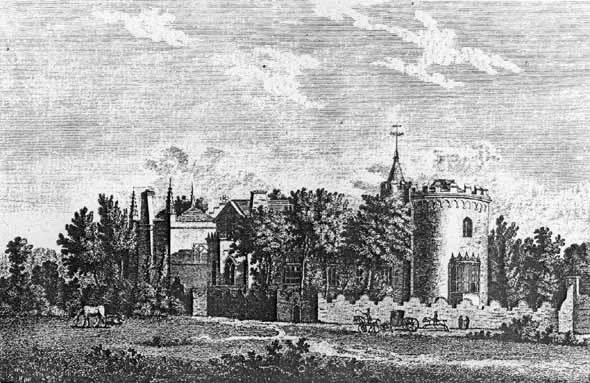
What are the Gothic elements in Act One of Macbeth? (Reading Journal for Act 1)

The first Gothic element we are introduced to is the setting o the play which is a key part as it sets the mood and tone for the audience. Automatically 'Thunder and lightning. Enter three witches.' A ere vibe is given off which leaves the audience to feel uncomfortable and slightly scared. The beginning starts off with the witches which shows mystery an mischief, the way the speak is in a steady rhyming pace which could also suggest the way they connect with each other and it gives the impression of a casting spell. 'Fair is foul, and foul is fair.' The phrase is almost like a tongue twisting spell which conveys death and cruelty. The three witches lurk around like the dark thoughts and temptations to evil. They play upon the ambitions Macbeth has. The audience is left to think at the end of Scene One, are the witches independent agents toying with human life, or agents of fate.

The references to animals are made throughout Act one, though they are animals of strong characters or features. For example in Scene 2, line 36 'As sparrows, eagles, or the hare, the lion. Then we have the Animal reference to the Raven. The raven is a strong symbol in mythology, art and literature. Though in some beliefs it is seen as the spiritual figure of God. The animal interpretations could be highlighting Macbeth's deep and dark character in the play.

The use of foul bitter language also adds emphasis the Gothic elements. Especially from Lady Macbeth, from a woman in the time that this was written, her status would be very little and she wouldn't be mentioned much in the play. she would be seen as an object not a person. Her strive for power, control take lead of her which reveals her masculine side, though it could be argued that Macbeth and Lady M. could be two sides to one body. For example in Act 1 Scene 5 ' unsex me here and fill me from the crown to the toe top-full of direst cruelty.' Her desire to have the body of a man and fill her with cruelty, yet she doesn't want to feel guilt for her actions. This is a typical Gothic style in literature, the lust for violence and inhumane actions but at the same time characters gain a thrill. 

Key things to remember for this act:
  • Introduction to the three witches.
  • Macbeth has been given a prophecy by the three witches that he will become king. 
  • Lady Macbeth is introduced- we see how she is as a character, shes stronger, ruthless and ambitious than Macbeth. 
  • Plan to kill King Duncan.
  • Language used by Shakespeare, Language contradiction is used at times with the witches 'fair is foul, and foul is fair'. Also used by Banquo 'Lesser than Macbeth, and greater'. Adds to a sense of moral confusion that their surroundings seem to be obscure.  
  • Form- Use of Soliloquy- shows dramatic tension, the focus on one character is a lot more powerful. Portrays more feelings and emotions, especially Lady Macbeth. 
  • Gothic Links- Can be compared to Modern day Gothic/horror films which we see how gender role have changed, women are more confrontational and out spoken, where as Lady Macbeth is held back a lot because of her role as a female. She wants to take the role of being masculine. 'unsex me'.
Themes present so far...

Corrupting power and Ambition- Macbeth's character is over ridden by power, Lady Macbeth, the issue of Morals constrains seems to be ignored.
Loyalty- Macbeth being loyal to the king, as well as being a loyal and devoted husband to Lady Macbeth. Feels a sense of pressure to take the role of a man, when being insulted against his manhood by his wife.




Saturday, 24 September 2011

Marxist approach to my coursework text :A thousand Splendid Suns


Marxism approach of A Thousand Splendid Suns-

Marxism is an economic and socio-political worldview and method of socioeconomic inquiry that centers upon a materialist interpretation of history, a dialect view of social change, and an analysis and critique of the development of capitalism. Marxism was found in the early to mid 19th century by two German philosophers, Karl Marx and Friedrich Engels. Marxism encompasses Marxian economic theory, a sociological theory and a revolutionary view of social change that has influenced socialist political movements worldwide.

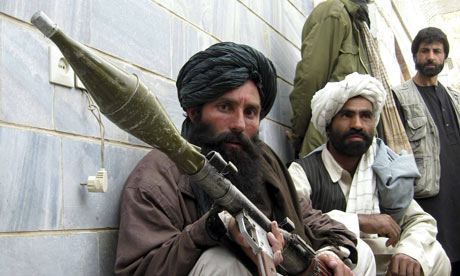
Marxism sees society as a super structure in which the economic base determines the shape of the super structure of all social institutions.  Society is based on the conflict of inequality and wealth and power, which underpins capitalist society and the conditions with in such a system explain why people turn to crime or act deviant. In the novel we see how society becomes distorted due to the new ruling of the Taliban as well as the change and development of a corrupt government. The decade-long war led to the deaths of over a million mujahedeen fighters and Afghan civilians and 14,000 Russian soldiers before the Soviet withdrawal in 1989. The Taliban regime that came to power, as well as Al-Qaida, originated from the noxious mix of US-sponsored anti-communist foreign policy in the region during this period. This is entirely omitted in Hosseini’s narrative, as he all but erases US complicity in the fate of modern Afghanistan.
  
Society is divided into two different classes the bourgeoisies the ruling class and the proletarians, the working class. The Marxist argue that an imbalance between these classes will always be a problem in society, majority of the working class are set up to fail in a capitalist society and a few will make it to the top. The bourgeoisie is able to keep its power partly through its ability to use the law to criminalise working class activities. The laws are not expressions of value consensus as the functionalist would say, but they a reflection of ruling class ideology. The laws are only made if they are in the interest of the ruling class.

Afghanistan was once a society where women were free to walk in the streets without being guided by a male figure shadowing them. Since the ruling of the Taliban genders become unequal women’s rights banish. This uncovers valuable social truths through the lives of the main characters. The reader gets an impression of the incredibly precarious existence of young people during the most recent period through the fate of Laila and Tariq. But above all, it lays bare the truly horrendous existence of women and girls. The power is passed on to men. Marxism focuses a lot on the strive for ‘power and control’ we see this in the relationships with Mariam and Rasheed. Mariam becomes powerless her status as an illegitimate child stays with her throughout her life, she feels punished for this mistake as she cannot give Rasheed a child. Rasheed becomes an aggressive, controlling violent. The recent attempts by the Afghan parliament with President Hamid Karzai’s initial support to enact a law that would forbid women from leaving their homes without male consent and would sanctify marital rape, recalls Taliban era proclamation.

Theory of alienation- refers to the separation of things that naturally belong together, or to put hate between things that are properly in harmony. In the concept's most important use, it refers to the social alienation of people from aspects of their "human nature" (Gattungswesen, usually translated as 'species-essence' or 'species-being'). He believed that alienation is a systematic result of capitalism. Theory of Alienation is the argument that in modern industrial production under capitalist conditions workers will inevitably lose control of their lives by losing control over their work

Sunday, 10 July 2011

Just a bit more on my novelssss :)


 Daughters of Shame- Jasvinder Sanghera

I have started to look into another novel, Daughters Of Shame by Jasvinder Sanghera. I am currently on chapter six, already i feel so engaged in this book. Its about many young asian girls from the age 17 and lower who are forced into arranged marriages. We are told about their experiences and stories of how they escaped these tragic events, as well as how such acts as running away can have an affect upon the family honour, pride and respect. Jasvinder Sanghera was also a victim of having an arranged marriage, we see how she becomes an inspiration to the younger girls, by offering a sign of hope. She runs a help centre in which these girls are able to freely express themselves, and release their pain and sufferings of violent attacks and verbal abuse.
    What interested me about this book was how the stories constantly developed into other characters being introduced and hearing their stories which were all different. It showed the diversity of ages, family backgrounds and cultural differences. What plays a big part is the idea of living in a sexist environment, boys in asian families are always presented as the superior sex. 
   I am really enjoying this novel, but I am still indecisive about using this novel fro coursework as its written very simplistically.


A Thousand Splendid Suns- Khaled Hosseini

 Reading through Part Three, I have seen how each chapter focuses on Laila and Mariam seperately but they are both a part of eachothers lives now. Both girls are introduced as Laila is found injured beneath a pile of rubble. Laila becomes  Rasheeds second wife as he begins to think havin an unmarried woman in the house will effect his reputation. Though this can also be an excuse for Rasheed to have children that Mariam could'nt give him.
   We begin to explore the relationship between the three characters and how they survive under the same household.
Mariam and Laila: We see Mariams normal character, caring, loving and putting in all her efforts in to provide and nurture Laila. We can see her discomfort she refers to Laila as 'the girl' though this could reveal her jealousy as Rasheed's attention is adverted towards Laila a lot more. Mariams vicious character is revealetd when Laila and Rasheed become a married couple. 'A thieving whore,that's what you are!'. Mariam's character changes in a light that we havent seen before, jealousy, cruel, and becomes a lot more envious towards Laila.
Laila and Rasheed: We see how Rasheed is alarmed by the appearence of Laila. His character changes to the time when we were first introduced to him. A caring, relaxed person. He is a content man as his wife can provide him with pleasure as well as children. 'Gul' meaning flower is used a lot by him, which shows his appreciation of Mariam and her beauty
   Rasheed begins to have doubts in his mind upon their baby Aziza, thinking it is Tariqs child though Laila is oblivious to his interpretations. Hosseini uses Rasheeds comment to Laila about not attaching herself to Aziza as the child death rate in Afghanistan is vey high, we begin to see the condition of Afghanistan since the war has took place. As the theme of poverty is shown throughout the novel there are certain points in which Hossieni uses jarring comparisons between Afghanistan and the western world.
Rasheed and Mariam: Their relationship is the same, Rasheed fails to acknowledge Mariam's presence as his first wife, she is still the same 'harami' girl (bastard child) we how she still experiences neglect as she cannot fulfil the wishes of her husband.

This Novel has developed a lot more, as there is more interaction between the three main characters. Also it develops as Part 1 and Part 2 bring Part 3 together, which I thought was a really clever idea as it breaks the novel down so the reader is able to understand what is happening and how the characters link within eachother. The novel develops with the war and the surroundings, which play a big part as the women become more isolated from society as well as Rasheed. I like the way Hosseini shows the development of peoples surroundings as well as the individuals, it makes the novel seem realistic as society can affect a person in many ways. Women now become afraid as the war has got worse, and innocent women as getting killed as well as raped.
Themes:
Pregancy and Children: Hosseini uses this as a symbol of hope and happiness upon Laila as her character remains positive. As she can see a reflection of Tariq which gives her reassurance that he may be alive. Also Aziza gives Laila hope to run away and find Tariq through stealing money from Rasheed.
  Though fertility and infertility has a traditional meaning upon Afghan women. A womens value in Afghanistan is based upon whether she is able to provide her husband with a family, especially boys.
 Female Bonds: The bond between Mariam and Laila strengthens, when Mariam sees Azia laying down wide awake beside her mother. The grasp of holding a child relaxes the connection that her and Laila have. We see envy and jealousy at first now we see them become companions. This is a key theme as society tries to rule out women it brings them closer as they can share experiences and gain confidence and love of eachother in which none have experienced before.

  The Colour Purple- Alice Walker
Character analysis:
Celie:  Is the main protagonist in the novel as well as the narrator. She is a 14 year old girl married to a man known as MR. She suffers violent beatings, and rape from her step-father. Celie is poor and uneducated girl coming from the rural areas in Georgia. She develops through the characreter of Shug as Celie learns many things about her, which they form an intimate relationship between themselves.
Nettie: Is Celie's younger sister. She is presented as the 'pretty' sister. She is bright, attractive and strong and realises the importance of education from a young age. Nettie often acts as Celie's protector She is thrown out of her house in which she joins two missionaries Samuel and Corrine and falls in love with Samuel.
 Mr: Celie's husband, which he abuses her for many years. Though we see his character change later in the novel as he begins to evaluate himself in tries to correct his eariler wrongs.
Shug Avery: she is presented negatively as a doubtful woman with very little morals. She is presented in a more positive light from Celie's view as she resembles her mother, in which Celie makes constant comparisions between them too. She can be seen as an inspiration as she does not like to be dominated upon by others, she is a strong character behind those repressed feelings she is a warm and compassionate character. 
I am enjoying this book a little as its all written in an epistolary form, which is different to hear from one persons view. I find it interesting how Celie writes her letters to God this is significant as Celie sees God as a helper and listener, yet she doesnt have a clear understanding of who God actually is. I found the use of colours interesting as well used by Waker to represent liberation through the brighter colours, rebirth and purity.The novel has progressed, as Shug Avery and Celie's relationship becomes intimate and she begins to ask Celie questions about sex. She stays with them when she finds out that she is constantly beaten when Shug is not present. Shug brings home a new husband but a secretive realtionship still continues between her and Celie.

Theme:
Female Relationships: Are presented throughout the novel as they allow for characters to open up and share experiences which are similar, these stories allow women to resist opression and dominance. Most importantly the relationship between Celie and Shug allows a sense of belief and trust as Celie begins to understand herself. 


Thursday, 30 June 2011

Keeping up with my novels

 Exploring more into my Novels!

A Thousand Splendid Suns- Khaled Hosseini
1- The key characters, how are they developing and are they changing?
Mariam- The main character in the novel. An ethnic Tajik, born into a illegitimate wealthy family living in Herat. She continuously tries to seek her father's acceptance as a daughter, though she feels pushed to the boundaries when she faces him. This leads to the heart of her mother's suicide and her own arranged marriage to Rasheed, a man much older than  her. She is a victim of abuse in the many years that she is married to him. Mariam is introduced as a very obidient and vulnerable child in which the audience feels sympathetic for She is looked down upon as a character throughout her childhood as she carries shame in the consequeneces that took place from the day she was born. She is labelled as a 'Harami' bastard child.
  Mariam has developed into a more independent individual in which she begins to understand the World through her own visions and experience. She has changed in a way, that makes it easier for those who have had arranged marriages understand Mariam, and are able to relate to the pain that she suffers in her unfortunate marriage. She begins to wear the full Burqa, she becomes more isolated as a character 'The loss of peripheral vision was unnerving.' 

Jalil- Mariam's Father, who made the mistake to produce her which from having an affair with his wife, with the housecleaner. He is a loving father during Mariam's childhood. She is the object of his shame but his love for her will never leave her feeling neglected despite what happens.

Nana- Mariam's mother, she was the housemaid for Jalil. He provided little shack in which she would stay with Nana. Nana is presented throughout the novel as an individual and casted out of Jalil's life. She becomes a clingy character as Mariam is the only familial connection as Mariam builds a bond with her father her mother kills herself.

Laila-  A very striking, bright young girl. Born into a wealthy modernised family in which a womans education is a top priority. She draws a close relationship with Tariq a childhood friend in which she marries later on.  She holds the reputation and respect among her friends as being on the newspaper one day, as well as her father telling her that she can change Afghanistan one day.
    Laila develops into socitey with more freedom, and appreciation of education than those girls who are less fortunate in a society where marriage and family at a young age is more favoured. Laila's character does begin to change when she is a married woman as she realises the duties as well as the pressure of family life.

Rasheed-The husband of Mariam and Laila. He is a cruel and abussive character in which he verbally and physically causes harm to both of his wives. Rasheed comes from a troubled past in which he as lost both his previous wife and his first son. Rasheed's character changes as once he is married he enforces religion upon Mariam such as forcing her to wear the Burqa. The loss of her children with Rasheed changes the relationship they have as they become more seperated and there is less interaction from when they were first married such as going out as a married couple. 

Tariq- Laila's neighbour, a few years older. He has lost a leg from the war. Despite this he is a character with a strong heart, and dependable. Their friendship grows into a romance in which they produce a child. Unfortunately Tariq moves to Pakistan to avoid the war in Kabul. 

2- Character Motivation...

Mariam- Has a constant drive to feel accepted by her father though she isnt seen as a legitimate family memeber. She feels the need to fulfil the wishes of Nana and to leave her feeling content at all times when she is present. We see Mariams curiosity of not understanding the word 'harami' bastard child. 'Nor was she old enough to appriciate the injustice, to see that it is the creators of the harami who are culpable, not the harami, whose only sin is being born.' She can be seen as a role model to the reader as her endless love and devotion to those that she seeks from (Nana, Jalil and Rasheed) isn't returned but she continues to show the love and respect she has for them.

Laila- Is more driven by her Father to be educated and bought up in a society where women are just as equal as men. She has a drive to recieve the love back that she gives to Tariq as a friend as well as being a romantic couple.She is impacted by dropping out of school as the war and violence leads to the streets becoming a very vulnerable place for any person. The heart breaking news that is given to Laila, impacts her as she finally is with the one she loves but he has to go. The sepration leads to her getting married again to Rasheed Mariam's husband. This also impacts her life as she makes a bond with Mariam in which they both act against the cruelty of Rasheed. 

3- The Plot...

The novel begins upon one character which is Mariam, in which she appears in part one of the book. It is then linked onto Part 2 of the stroy in which Mariam is introduced. Overall the novel has four patrs. Each Part we learn something new about each character, this helps to story progress  as we changes in society, relationships and individuals. We see the story from 2 young women, who experience the three decade war going on between the Jihad, civil war with Taliban. Mariam the first young girl, who has bought shame upon her Fathers name. She is forced to marry Rasheed a who becomes brutal man as she fails to produce children with him. The Parts of the novel are joined when Laila becomes the second wife of Rasheed.The two girls become allies in a battle with Rasheed whose violence is endorsed.
   The Plot is heavily built around the significance of a male figures being in control of women, it shows a side of reality to those who are well aware of forced marriages in countries which are patriarchal. Each woman in the novel comes to acceptance that the path they choose, they will never be content with. For example Mariam choses the path to sacrafice her life inorder to save Laila after she kills Rasheed. Laila has a different story, a young intelligent girl, with a good educational background. She is with the love of her life, though it comes crashing down, she has to find a way to keep the sacrafice Mariam has made from committing a horrible yet relieving act.
  Currently, I have seen the novel develop through many ways such as the culture of women, tend to be more closed of in society, they are seen as objects of pleasure and child production. We also see how boys in these cultures are more favoured as they can go and fight for their country, keep the family name as well as bring a wife home to nurture the family.
  I have also seen the way the country develops and how the people of Afghanistan suffer from the violence, abuse and threats. Though they have a strong belief that peace will arrive one day.
Education, is an important development in the novel, as well for Afghanistan today. The education system is begining to open for women, such as Mariam and her friends coming from a wealthier background. Its not common for women in a society where education as a key facility of life.


                                                                  THEMES!

  • Strength Of Women: The young women, Mariam and Laila as well as the other girls mentioned, have grown up to act mature in a way that they are prepared for married life and its duties that come with the role. The forced marriages, bring them a life of misery in which we see their strength and efforts put in to please thier men to the highest ability. These women grow up as young experienced individuals who have the strength to persevere to receive attention, and independence.  Mariam suffers to seek attention from her father to accept her as a daughter and not a shadow of shame. She takes the pain of an abusive husband for the past 27 years but takes her fate and tries to build the best out of what she has. Whereas, Laila's dream of the perfect husband fails, in which she tries to rebuild her life with Rahseed in which she too becomes a victim of abuse. She then faces the challenge to help rebuild her country and to honor the memory of Mariam.
  • Overriding power of Men: Power is overriding in the men that are in the war, the Soviets, Mujahideen and the Taliban all share little compassion for human life. The status that power brings is a key motivation in which these men remain evil, and become ignorant to improve the beauty and success of their country. The women are seen as victims in this male dominating society. They aren't given basic rights, such as freedom and speech. If one was to express their feeling a servere punishment would be put in place publicly, whereas men like Rasheed may have killed both Mariam and Laila this wouldn't be looked down upon at all.
  • Loyalty and devotion: both women accept the roles of being wives to husbands in which they have been placed with. For example Mariam, she becomes a loyal and devoted wife in serving what Rasheeds wishes for with high standards. Though she fails to give him a child. She is also very loyal to her mother in the beginning, she shows love and attention to her mother, despite Nana not expressing her entire feelings to Mariam. Laila, shows loyalty and devotion towards her father, to have a life of education and to show a change in Afghanistan. 

Other themes are present such as:

  • Discrimination
  • Outcast
  • Hope
  • Peace
  • War
  • Love
  • Pride
  • Religion


Saturday, 25 June 2011

Other Aspects Of Gothic Literature

Gothic Women
Gothic women in the early years were portrayed as weak, vulnderable and were often objects and controlled by men. They were often placed as negative in society as they were corrupted by male power.  
   Where as women in modern gothic literature are presented as more sexual, agressive amongst a male dominated society. There are two catorgories of  women in modern gothic literature. The first is seductive and threatening, theses women tend to be more premiscuous as well as independant. The second type is submissive, these tend to be more humble, lack self confidence and obidient.


Male Gothic Protagonists
The male gothic protagonist is often driven by slefish needs and desires, they turn away from the norms of society, in this way they feel more socially acccepted as they usually work independantly. Their actions and characteristics move the story along and determine the overall outcome of the gothic novel. 
Examples of popular Gothic protagonists.
  • Frankenstein- A classic tale of a man-made monster who seeks acceptance from society, despite his unusual apperance and strange upbringing.
  • Dracular- A young English lawyer who travels to the Castle of Dracular, to complete a real estate transaction with a nobleman named Count Dracular. The young English man is warned about the destination. He is given charms to work against evil and uttering strange words that is later translated into 'vampire'.


Gothic Settings
It was first found in Sweeden the use of Gothic architecture, Gothic novels were mainly set in deep dark places inwhich buildings were begining to decay. Settings were mainly in Castles which were mysterious, dark and secretive in which the superantural would come to life as well as being set in Graveyard, Churches etc. Castles were mainly used to create a specific mood and atmosphere this cretaed tight intensity between the characters as well as the audience. These mysterious places unraveled the fear of the unknown. 
   Settings were often associated with medieval buildings, they saw them as dark and terrifying as it reflected the times of harsh laws, tourture which had fascinating rituals.

  
Gothic Novels, Short Stories and Poems  
Gothic novels are strongly associated with Catholicism. As characters are introduced they are immediately presented from a religious background. The characters flaws are directly associated with their Catholic beliefs from the readers view.  Many of these novels are Ironic as they underline the message of humanity.
 These are present in novels such as:
  • The Castle of Otranto- This short novel, shows the negativity of Catholicism through the character Friar Jerome. Many sinful events take place, For example Manfred, the lord of the Castle of Otranto, wants to divorce his wife so that he can marry the young and beautiful Isabella. Divorce is highly looked down upon in Catholicism.
  •  The Monk- This is one of the most anti-Catholic characters in gothic literature.Ambrosio, a monk who falls into sin with Matilda, when her true identity is revealed. The thought of suicide is ingrained in her if she cannot have his love (already we see lust and suicide which are major sins in Catholicism) which leads to his own downfall.

  • Zeluco- The novel shows the animosity between Protestants and Catholics. A Sicillian Catholic, who lacks morals and is only interested in himself. He leaves Countess Brunella's niece after impregating her. His first wife dies of a broken spirit once he marries her for her money. Once again this goes against all the beliefs of the Catholic faith.


Wednesday, 22 June 2011

 Origins of Gothic Literature


  Gothic literature began in the year 1765, with its first novel The Castle of Otranto, by Horace Walpole. This novel was based upon an Italian prince
who plans to turn away the curse brought on his family when his grandfather seizes the principality of Otranto. These novels were seen as a source of barbarism (a brutal or ignorant act). Gothic writers were mostly protestants, where as Catholics were very superstitious therefore where more closer to barbarism.
In literature, the word ‘Gothic’ refers to a mode of fiction dealing with supernatural or horrifying events.
 
 It also originated from rich architecture mainly between the 12th-14th centeury. Its intricasies of the height, ribbed vaulting and stained glassed windowns of Catherderals, showed a medium of being between Earth and Heaven. It Catholic styles influenced the presence of Catholicism within gothic literature, recieved negativity due to many unexpected occurences within the church. The vaulting arches and spires of Gothic cathedrals reach widly to the sky as if the builders were trying to grasp the heavens a desire for the eternal. 


Gothic literature can be traced back from many religious, cultural and artistic features. These features became very popular in the eighteenth and nineteenth century. Novels such as Demon Lover and Cannibal bridegroom . Though in the Seventeenth century novels were belived to have served as precursors which produced romantic literature texts such as Hamlet by William Shakespear. which also contained superantural elements to help build strong views on religion to avoid those that were superstitous.

Gothic Literature is popular for its use of recurring themes, images and symbols. These motifs run throughout the novel and help build the storyline to a climax in which the main protagonist reaches a dramatic ending or unpredictable event.  

 Key characteristics from all Gothic novels originate from a fascination for the past (revenge seeking), occurences of the superantural, and magic. Plots are usually set through dramatic settings which represent  many emotions mainly fear and horror. 

Gothic literature gets its name from its simularities to the Gothic medieval cathedrals, which have many artisitc and royal features. The word 'Gothic' derives from 'Goth' the name of one barbaric Germanic tribes that invaded the Roman Empire. This is associated with savagery which is property that is untamed or ferocious. 


Saturday, 18 June 2011

 I have started to read,  A Thousand Splendid Suns by Hosseini, as I really enjoyed the writing style of The Kite Runner. I was particularly interested in the way of women being presented in a patriarch society, also the realisation of how women have developed since these times.
     Coming from an Asian culture i found that it was easy for me to relate to topics, such as religion, marriage and history. 

I have read up to chapter 16, the main Character  Mariam who is aged 15, is forced into an arranged marriage with a man who is a lot older than her. What I found interesting from this point was the relationship of Mariam and her Husband Rasheed starting of smoothly, but as this progresses the relationship changes. We also see how married life in this society has an affect upon Mariam, and the duties that come with this.
   The duty of motherhood, when she fails to become a mother several times, this also leads to her and husband relationship becoming slightly horrific when the first scene of abuse/violence occurs.

The themes i have recognised so far are:
Connection to Afghanistan- As Hakim quotes poetry, Fariba doesn't want to leave the land her sons have died upon.
Love and Respect- between Mariam and her mother, also for her father as well as Mullah Faizullah.
Guilt- the death of Mariam's mother, she feels that she is to blame for leaving her.
Isolation- 'she did not like the suffocating way the pleated cloth kept pressing against her mouth'. Mariam is introduced to wearing the traditional Burqa. Her identity feels hidden, she feels excluded from society 'it was strange seeing the world through a mesh screen'.


I have also started to look at Novels to Compare A Thousand Splendid Sons with a few suggestions:

Purple Hibiscus, by Chimimanda Ngozi Adichie interested me as it shows the disintegration of a wealthy family, its a view of violence which shares similar qualities with Hossieni's novel. It shows a contrast between wealth, women, and especially religion.


I have also started to look at The Color Purple by Alice Walker. I was interested in the way that the novel was presented throughout, the use of letters seemed different yet interesting. Violence towards women is also shown throughout the novel.